Showing posts with label Educational board games. Show all posts

Friday, December 13, 2019

Learning Puzzle Games for kids


Kids' puzzle games are designed for learning and problem-solving by using primary pattern recognition, sequence solving, and logic. An effective medium of early childhood education, these games help kids in developing their reading, writing, problem-solving and coordinating skills. Learning Puzzle games with pictures can be helpful in teaching kids to recognize colors and letters and games involving insertion of pieces help kids develop the muscles used for writing.


Kids can either play these games individually or with help of adults or other kids. Proper care should be taken in choosing kids' puzzle games suitable for their abilities and ages. Toddlers are comfortable with three- to four-piece wooden puzzles, whereas two-year olds enjoy piece-fitting puzzles. The number of pieces in puzzles keeps increasing with age, while the size of the pieces are typically larger for younger kids. School-age kids can work on complex fifty- to one-hundred-piece games. Kids' puzzle games may include nursery rhymes or scenes from storybooks. These puzzles can also be used for formal learning, as they provide a useful means to the teachers to assess a child's development in terms of speech, movement, and concentration. Damaged puzzles or puzzles with missing pieces should be weeded out as they invariably frustrate the child.


Kids' puzzle games can also be created at home by mounting pictures on cardboard and cutting them into large pieces. Kids can use scissors to cut pictures from magazines and devise their own puzzle games.

Some of the popular kids' puzzle games are alphabet and number puzzles, world map puzzles, travel floor puzzles, basic jigsaw puzzles, slide puzzles, and maps of the USA floor puzzles. Kids' puzzle games provide a perfect mix of fun and educational games for kids.

Chalk and Chuckles provides detailed information on Puzzles, Crossword Puzzles, Jigsaw Puzzles, Kids Puzzle Games and more. Puzzles is affiliated with Chalk and Chuckles [https://www.chalkandchuckles.com/].

Wednesday, June 5, 2019

How a Toy Games Can Change Your Kid's Life

Kids toys games are not only designed and meant for play pleasure, relaxation, games and fun -they are also essential as great tools in health, mental and academic development of kids.

How can a toy change your kid's life? You may ask. When a child involves in processes by playing, they tend to become creative and develop abilities that would go on to build their academic prowess.

Toys are undoubtedly beneficial to kids and can help to change their lives in no small way. A toy can change your kids' life in different ways. Toys serve as the building blocks for the future of your kids.

https://www.chalkandchuckles.com/product/sandwich-mix-up/

Toys educate your kids about themselves and the world. One way a toy can change your kid's life is by sending messages and communicating values generally, some of the ways a toy can change your kid's life are in the development of

A). Social & Emotional Abilities:

Dolls and stuffed animals are best for representing human beings through make-believe roles. Children develop security, happiness, sharing and cooperation via play. Educational Games for kids

Stuffed toys, musical mobiles can give soothing remedy and luxury to a child in trauma. While other toys for make-believe like get dressed-up clothes, toy automobiles, vans, video games, musical units, and books assist children in constructing self-expression and confidence.

B). Physical Abilities:

Playing on swings, monkey bars, skipping, assist in building physical dexterity, strength and balance in kids. Other toys which include toy vehicles, wagons, motorcycles, brooms, and shovels also broaden their physical or muscle improvement.

C). Creativity:

Great motor abilities required for writing and creative artistic development may be developed in kids through drawing, painting and art sports. Toys for creative and highbrow development include clay, crayons, paints, books, paper, and scissors. Educational Board Games

https://www.chalkandchuckles.com/product/get-puzzled/


D). Language Development:


Reading and playing with image books help increase listening and communication capabilities in kids

E). Cognitive and Problem Solving Capabilities:

Playing with nature based activities like sand toys and play dough; water toys assist youngsters with turning them to be good at investigating and experimenting because their sense of interest, curiosity, and discovery is ignited.

Playing with boxes, puzzles, and blocks, also teach them the way to group, manage and categorize objects.

Some toys fit into more than one category, and kids need to enjoy playing with the toys from different categories for total development.

F). Logical Reasoning:

Exposing your kids through toys to logical reasoning at an early age, enables the kid develop his/her mind and create an essential basis for their ability to examine and make connections in data reasoning in the future.

Distinctive studying tools like puzzles and building blocks assist in beefing up a baby's potential to sequence, conceptualize, and sooner or later troubleshoot problems. Learning toys games

G). Mathematical Skills:


it's never too early too early to construct a "can-do" mindset towards math in your kids' lives!

Toys that encourage counting, simple operations and figuring out shapes are right tools to begin getting to know about math. Despite the fact that this is frequently the challenge in which kids lack self-assurance, here's your chance to get your kids to feel he can be a hit at it in an enjoyable and less stressful manner!

Now you know how a toy can change your kid's life!

Conclusion
  •     Toys can change kids live positively in no small measure.
  •     Toys are great in building the mental capacity of your kids.
  •     Never deny your kids access to great toys.

Monday, May 20, 2019

Best Learning Educational Puzzles Board Games

Learning does not need to be cumbersome. It only takes innovation and clever thinking to discover other ways to imbue knowledge on children and even on adults. To do this, one has to simply add two variables: fun plus learning. The result? Well, educational board games for one.

Board games entice people to join in. In more ways than one they have to utilize their minds to memorize facts or solve problems to win. This way, they are more likely to engage on learning as much as they engage on gaming. Learning and gaming go hand in hand in this case, which makes information stick longer and faster in their heads compared to traditional teaching methods.

Educational board games are also great as an after school activity for children. Learning doesn't have to start and stop at school. Continuing their schooling in a subtler and fun manner-i.e. educational board games-can help them out. Games like these help them enhance the way they think things through, quicken how they process information, and liven them up and motivate them to learn more.

Of course, they simply think that they are having fun and playing games, which is the important factor with educational board games. Making them feel that what they are doing is learning will encumber them. On the other hand, making them feel that what they are doing is fun makes them doubly enthusiastic, and at the back of their heads they are already storing knowledge. Moreover, if children are home schooled, educational board games are a great way to teach them.

https://www.chalkandchuckles.com/caring-cats/caring-cats-range/


But not all board games are applicable for everyone. Each game will have to depend on age.

Ages Two to Three

Looking back, most baby toys are made especially to enhance the mental capabilities of the baby. Games like these, are Cariboo. This game enhances the child's recognition of colors, shapes, letters, and numbers. Being able to discern these very simple things is extremely important in a child's development. Toys games for 2-3 years kids

Ages Three to Four

At this stage, children need more slightly complex games. In fact, they can even start playing educational board games many adults still find enjoyable. This means that board games for this age bracket has to have more complex rules, and they have to strategize, or reason out, and as well as discern spatial and color perception. Games that can fall under this category can be Dominoes, Checkers or Chinese checkers, Uno, and even Monopoly. Toys games for 3-4 years kids

Ages Five to Seven

For this crucial stage, physical and mental changes are happening in a young person. The games integrated in here have more complex rules. They have to utilize their thinking more. This keeps them on track and their brain on alert. They also need to learn about teamwork at this stage. Board games for this age bracket help youngsters interact with others and develop the need to win in games. Monopoly is still applicable at this stage, but games like Clue (a detective game), the Game of Life, and even chess can now be incorporated.

Eight and Beyond

By the time they are eight, they can begin enjoying most board games adults play. They need to utilize math skills, logic, and more complex strategizing for games at this level. Card games are great as well, though teaching them gambling isn't a good thing to integrate to their education. Scrabble is a better way to incorporate vocabulary and math skills for this age. Chess, too, is even more applicable for them. Basically, any adult educational board games can apply.

However, people still need to remember that at this stage, children are still easily influenced. Bad education is even worse than ignorance, so be careful what trait is being imbued on a young, susceptible person's mind.

Monday, May 13, 2019

Educational Board Games - Play Your Kids Smarter

Educational board games are a worthwhile investment, both in time and money. Children today are technological wizards and it can be difficult to pull them away from their electronic gadgets. However, it is important to develop family connections and learn life skills, which can not be done when a child sits alone with a remote control. In this article we give you five reasons to add educational board games to your family time.

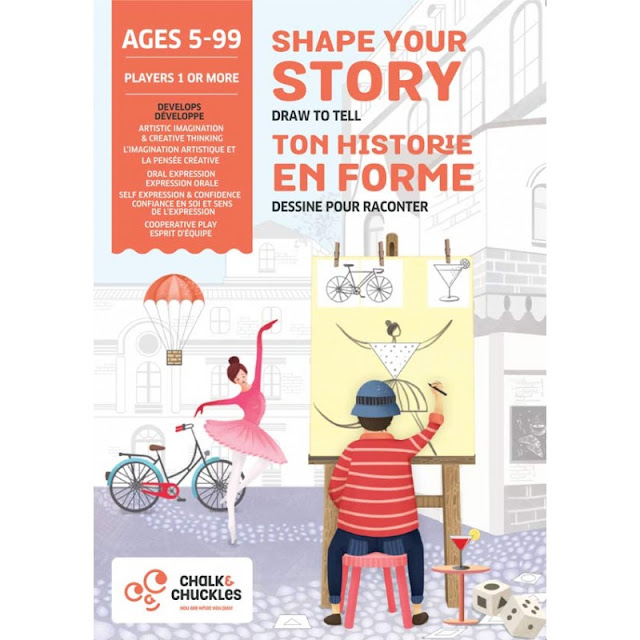
Shape your Story


1. Educational Board Games Get Your Children Away From The Computer And Television

How many times have you found yourself saying to your kids, "It's time to get off the computer," or "No more TV for today." Wouldn't you like to give them a fun and educational alternative? Board games are a fantastic way to engage their minds and get them out of that electronic coma. Human beings are communal and need social interaction. Educational board games can bring families together and teach your children many important skills. We know that letting our children spend hours watching TV or playing computer games is the easy solution. It may take more time and effort to play a game with your kids but the rewards are priceless. We have had many occasions where our children have said, "I don't want to go to bed. Can we play one more time?" These were the same children who said, "I don't want to play a game tonight. Can't we just play the Wii?"

2.  Develop Family Connections

Educational board games give your family a time to be together. The unexpected surprises in game play bring about much laughter and bonding. Although these experiences may easily be forgotten by parents, they leave lasting impressions in our children. Many times our children have said, "Remember when such and such happened? Wasn't that funny?!"
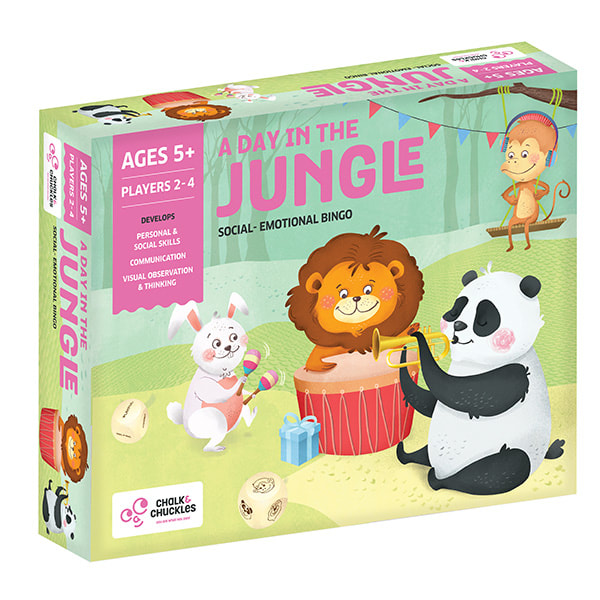
A Day in the jungal

3. Educational Board Games Are A Fun Way To Learn Life Skills

Lessons learned when playing board games can transfer to important life skills. It is easier to teach a child how to share pieces on a board game than the trucks in a sandbox. Kids also learn patience as they need to wait for their turn. In addition, games usually have one winner. Winning the game builds self esteem. Losing the game gives children the opportunity to learn and adapt for the next
ame play. It is important to teach them that even though they may have lost this time, there will be a next time and they can apply what they have learned. This will give them a better chance to win. As children get older, they begin to learn how to focus and strategize. For example, when playing Chess you need to make every move count. This is an equally important lesson in life. Educational Games for kids

4. Your Kids Are Learning Without Even Knowing

When you are so immersed in the enjoyment of playing, you don't realize all of the skills that you are learning. This is what is so great about educational board games. You learn the rules, learn the game play, you start playing the game, and then you adapt. All along your mind is active and you are thinking and learning as you try to out do your opponent. You get so caught up in the fun, you pick up the skills with ease. Learning Brain Games

5.  Educational Board Games Are Fun For Kids And Parents

Ultimately, why do we play games? To have fun. Educational board games are fun to play with others. Your children learn by watching you. Don't get too competitive. Instead, work with cooperation and enthusiasm. Make it fun. Your children will have more fun and will learn the joy of playing games as a family.